Image

Blog
Peter Muoio received his bachelor’s degree in history and economics from the University of Pennsylvania and his Ph.D. in economics from Duke University. A Brooklyn native now based in New York, he has built his career at the intersection of economics and real estate, focusing on risk assessment, data visualization, and making complex analysis accessible to diverse audiences. Dr. Muoio is now the senior director and head of SitusAMC Insights, where he leads research and analytics on commercial real estate markets, assets, and transactions. Over the course of his career, he has held numerous senior leadership roles including executive vice president at Ten-X and managing director, global head of real estate research at Deutsche Bank. He has served as a member of The Graduate School's Board of Visitors, including a term as chair of the Board.
I grew up in a middle-class neighborhood in Brooklyn. Neither of my parents went to college, but they emphasized education. My father was an avid reader. My journey had several inflection points: attending Stuyvesant High School in Manhattan, going to University of Pennsylvania (dual major in history and economics), and receiving the James B. Duke Fellowship at Duke University. While finishing my dissertation remotely in New York, I received a job offer at a financial institution. Though not initially in real estate, I developed a risk assessment system for their real estate lending operation that became a “home run” and set my career path as a real estate economist.
Several key lessons from Duke shaped my career. My econometrics professor Dudley Wallace taught me to visualize data before analysis to identify issues and make information digestible for non-technical people. My dissertation work with advisor George Tauchen involved creating a unique historical dataset that became highly sought after by other researchers. These experiences taught me the importance of data-driven insights, which I summarize with a Sherlock Holmes quote: "Data, data, data. I can't make bricks without clay."
The most surprising thing is that the same patterns repeat despite historical lessons. People continue to make the same mistakes with over-leverage during good times, followed by defaults and distress when things slow down. After workout processes, markets recover, and those who understand cycles can achieve good returns. There's a surprising “lack of memory” in markets and people's behavior: recent history matters, yet people make the same mistakes repeatedly.

It's very flattering and honoring that people want to hear my thoughts. I take it seriously, focusing on providing digestible information rather than showing off. Presentations always make me nervous at first, but they’re exhilarating once they’re done. The key is knowing your material intimately so the presentation flows naturally and you can confidently handle Q&A. It's also important to admit when you don't know something rather than making up answers.
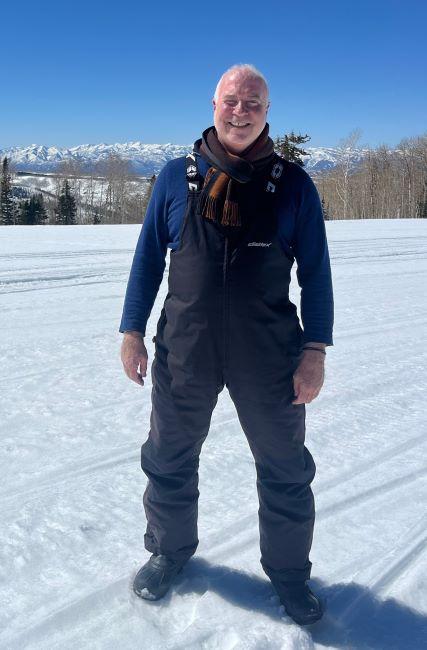
I would love to be a landscape architect, botanist, or garden designer. I enjoy gardening and visiting gardens. I once stayed at a hotel in Florence with a garden that became my inspiration for my own backyard designs. I also appreciate architecture and urban design, particularly how cities work with the interaction of architecture and streetscape.
Go with your gut and go where they want you. When I was choosing graduate schools, someone advised me to go where they really wanted me. Duke offered me a fellowship while other elite universities didn't. Don't do something just because it's what you're told you should do. Follow what your inside is pushing you toward. It's like flipping an imaginary coin: if you want to flip again after seeing the result, you really want the other option.
Getting basketball season tickets with a friend as graduate students. This was at the beginning of Coach Krzyzewski's tenure. Back then, graduate students could buy season tickets rather than having to tent like undergraduates. That simple decision to get tickets as a study break led to years of watching the Tommy Amaker and Johnny Dawkins teams that set the stage for Duke's later basketball success.

M.S. student, Quantitative Management: Business Analytics
Troy Tien Nguyen is a master’s student in the MQM: Business Analytics program at Duke Fuqua School of Business, concentrating in risk. He is currently exploring careers in quantitative finance, data science, and product management. Outside of class, Troy enjoys lifting, journaling, and trying new experiences—most recently through tennis and golf classes at Duke.