Image

Blog
Joseph Davis is the global chief economist for the Vanguard Group and global head of the investment strategy group. This group’s client-facing team develops asset-allocation strategies and conducts research on those strategies, capital markets, and the global economy. He also chairs the firm’s strategic asset allocation committee for multi-asset-class investment solutions. He is a frequent keynote speaker, helped develop Vanguard’s capital markets model and the annual economic and capital markets outlook, has published white papers in leading academic and practitioner journals, and currently serves on the editorial board of both the Journal of Portfolio Management and Journal of Fixed Income. He is also a member of The Graduate School's Board of Visitors. His book Coming into View: How AI and Other Megatrends will Shape Your Investments, was published in May 2025. Dr. Davis graduated summa cum laude from Saint Joseph’s University, and he received his A.M. and Ph.D. in economics from Duke University. He also graduated from the Advanced Management Program at the Wharton School. You can learn more in a recent video interview about a day in his work life.
You have to be very deliberate with time management, and sometimes that means turning down opportunities you’d really enjoy. I was writing a book, and I had to dedicate two or three hours to it every day to make progress.
I think some broad professional advice, regardless of what field you’re in, is to read as much as you can. This provides a powerful foundation, and with the world changing so quickly, not enough people follow this advice. In terms of financial success, I’d say save as much as possible. Something a lot of financial planners will tell people is even if they’re good savers, many don’t go through the exercise of seeing how much they’re actually spending. And for years I wasn’t doing this, but once a year I’ll look and see how much I’m actually spending on all these items.
I do a lot of reading on my own along with a team of researchers who keep me informed. I always ask other people what they’re reading, which is a good way to extend your network as well. It depends, too, on the objective you’re trying to achieve; I put less time into reading about the news because it’s such short-term information. It’s important, but I wouldn’t spend more than ten minutes on that a day. I’m more interested in things that have more permanence, whether that’s geopolitical, financial, or economic. There are rare moments where something really profound happens and you have to read more deeply, of course, but I really try to focus on things that are evolving and have more permanence.
I do still read academic work. For example, I’ll glance at every MBR (Management and Business Review) paper that comes out. I may just read the executive summary or the first few pages, but it’s enough to make a mental note that if I have to come back to it or read more in this area, I have some sense of where to go. I’m not trying to be an expert in the area, but just understand the dialogue taking place in a particular field. MIT has a great journal on technology, and Harvard Business Review is excellent for strategy and leadership.
Books are all over the place. Some that really resonate with me are historical ones, like The Idea Factory, which is about Bell Labs and the early days of the cellphone and transistors. It’s interesting; at Bell Labs, they traced the source of a lot of these ideas from scientists to a single researcher at Bell Labs. It was the idea of bouncing ideas off each other.
Usually a lot of technology, which is a huge field, healthcare, fiscal dynamics anything that catches my interest. I’m a fan of history, so I try to pair my reading along the lines of “backwards-forwards,” even when they’re completely separate discussions. The more you read the more you’re able to connect the dots because you have greater context even between unrelated topics.
Coming into View was published in May, and it’s already made the USA Today bestseller list. It addresses investing in AI, fiscal pressures, and other big trends. In June I traveled to Harvard Business School to discuss it.
Don’t be afraid to use the Duke Alumni Network. I didn’t do this enough early on in my career. Reach out to people that you don’t know! You still have a shared common connection. Some people spend 10-15 minutes a day networking and it’s very successful for them. When you need your network, you already have it, rather than waiting until you need it to build one. And I’m not a natural networker, so it’s something I have to work at. Maybe send an email to someone you don’t know! That’s something I underestimated for the first 10 or 15 years of my career.
When you reach out to someone, be concise and straightforward. You have to expect “no” responses, but you can increase the odds by being crystal clear about what you’re looking for. Make it very easy for them. Say, “I’m only asking for this small thing,” and offer a solution. They appreciate directness because they have 100 or more emails they need to read and you don’t want to create a lot of work for the individual. Persistence is important as well: don’t be afraid to follow up with them if you don’t hear back. Make it an easy question. For example, “I’m thinking about these three firms, is there anything I’m overlooking?” which is much easier to answer than “Do you mind if I sit down with you for an hour and discuss my goals?” People are very willing to help; you just have to reduce the initial cognitive load.
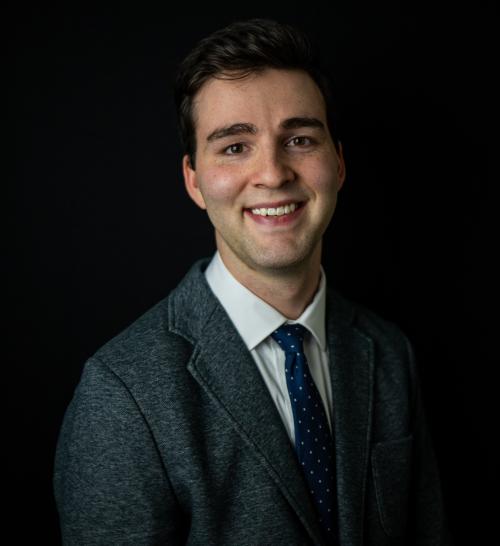
Recent M.S. graduate, Statistical Science
Will Tirone is a graduate from the M.S. in statistical science program at Duke currently working as a Data Scientist 2 with Humana. He is interested in statistical computation, statistics applications to healthcare and finance, and statistical software development. You can view his GitHub profile to see his current work and projects.